YopouLab Project – Presentation of the results of the 2026 household survey in Yopougon
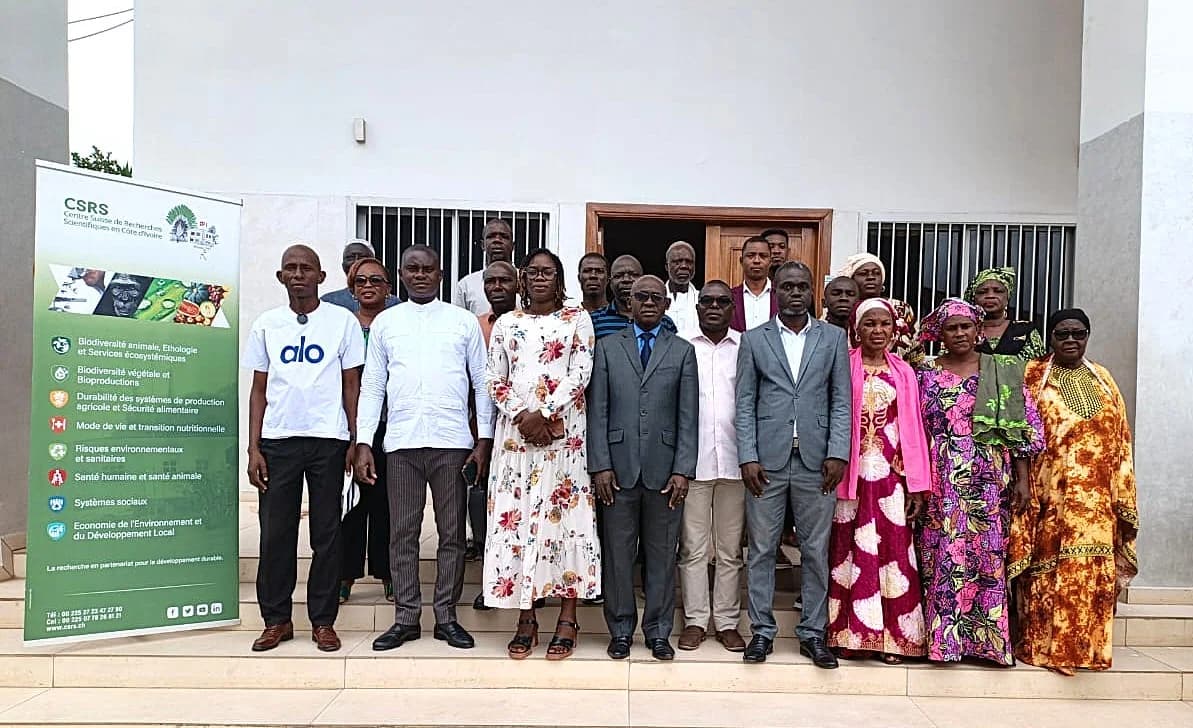
On Tuesday 28 July 2026, the CSRS and its partners at the Swiss Tropical and Public Health Institute (Swiss TPH) organised a workshop at Yopougon Central Town Hall, located in Selmer, to present the findings of the household survey carried out as part of the YopouLab project. The meeting brought together members of the project’s research team, representatives of the municipal authorities and community leaders.
On Tuesday 28 July 2026, the CSRS and its partners at the Swiss Tropical and Public Health Institute (Swiss TPH) organised a workshop at Yopougon Central Town Hall, located in Selmer, to present the findings of the household survey carried out as part of the YopouLab project. The meeting brought together members of the project’s research team, representatives of the municipal authorities and community leaders.
Conducted amongst 1,495 households between April and May 2026 in the areas of Yopougon Millionnaire, Millionnaire Extension and Wassakara, this study aimed to gain a better understanding of the links between the urban living environment, health, well-being and access to healthcare for local populations. It also provided an opportunity to assess residents’ willingness to join a future health and demographic follow-up cohort, in line with the vision of establishing a Health and Demographic Surveillance System (HDSS) in Yopougon, modelled on the one already in place in Taabo.
The presentation of the project and the reporting of the results were conducted jointly by Dr Salimata BERTE Epse BERTHE (CSRS), Etienne KOUAKOU (CSRS) and Vitor PESSOA COLOMBO (Swiss TPH, online), researchers responsible for coordinating the YopouLab project. Discussions and interactions between the researchers and participants provided an opportunity to share the key findings of the study, gather feedback and suggestions from participants, and strengthen the dialogue between researchers, decision-makers and local communities. The municipal authorities have shown particular interest in this project and intend to incorporate the findings into the next three-year plan for the well-being of their residents.
This approach is in line with the YopouLab project’s aim of transforming scientific data into knowledge that can inform public policy, with a view to building healthier and more liveable cities for the well-being of the population.
NGS/CelCom