RCI: a research project to combat mosquitoes launched
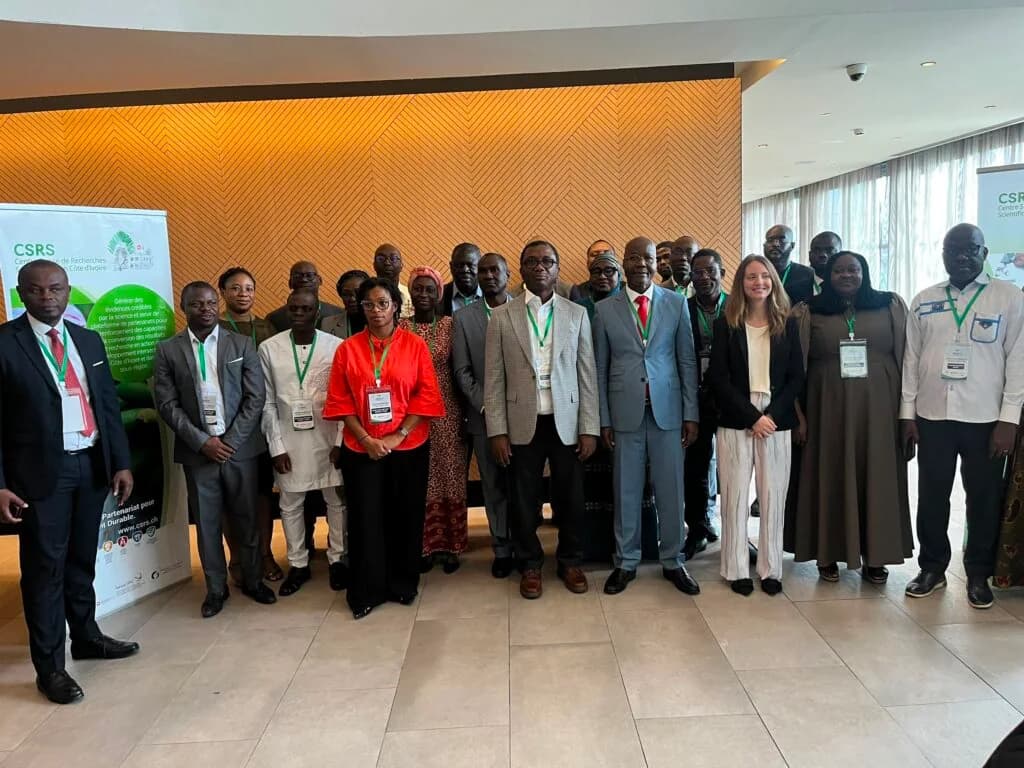
To tackle the malaria crisis and overcome the growing ineffectiveness of current chemical insecticides, a major scientific research project was launched on Wednesday 26 August 2026 in Abidjan. Named Nectar, this project is dedicated to discovering new active molecules effective against resistant mosquitoes.
To tackle the malaria crisis and overcome the growing ineffectiveness of current chemical insecticides, a major scientific research project was launched on Wednesday 26 August 2026 in Abidjan. Named Nectar, this project is dedicated to discovering new active molecules effective against resistant mosquitoes.
A medical innovation project in the fight against mosquitoes has been launched in Côte d’Ivoire, co-led by the Centre for Research and Scientific Studies (Centre Suisse de Recherches Scientifiques en Côte d’Ivoire, CSRS) in partnership with a prestigious international consortium, including Purdue University (USA), the firm Enveda (USA), the Bill & Melinda Gates Foundation and Nangui Abrogoua University in Abidjan.
Current insecticide-treated bed nets are showing their limitations. “The chemical compounds used to date are no longer effective because the mosquitoes have developed resistance,” explained Professor Benjamin Koudou, coordinator and director of the Nectar Project.
According to Professor Benjamin Koudou, director of the Research Group on Disease Vectors and Clinical Studies, the solution now lies in nature: exploring the wealth of local medicinal plants to isolate new insecticidal molecules.
Drawing on the African pharmacopoeia to overcome resistance
Professor Jérémie Zoueu, Director-General of the CSRS, highlighted the dual benefits of this approach: addressing a major public health challenge whilst adopting a strictly ecological approach that respects local communities and is free from the side effects associated with traditional chemical products.
Of the fifteen or so plants targeted by local research, five are already set to enter the field collection phase shortly. The aim of this 22-month project is to obtain, within one to fifteen months, plant extracts that are highly effective against malaria-carrying mosquitoes that are currently resistant to insecticides.
The overall aim of the project is to harness the wealth of African herbal medicine and local plants to discover new active ingredients and develop innovative solutions for vector control against mosquitoes, particularly in relation to malaria, dengue, yellow fever and all other vector-borne diseases.
This project harnesses plants from the African pharmacopoeia in the fight against disease vectors through the identification, ethical harvesting and local processing of plant biomass, underpinned by rigorous traceability.
The objective is ambitious: to isolate two or three highly effective plants within the first 12 to 15 months, in order to develop, in collaboration with US firms, finished products for indoor residual spraying or the impregnation of next-generation mosquito nets.
Scientific diplomacy and compliance with the Nagoya Protocol
This project makes Côte d’Ivoire the first and only African country to be part of this strategic consortium. Present at the launch, Deborah Attolini, Chargée d’Affaires at the Swiss Embassy in Côte d’Ivoire, welcomed this development: “For us, the CSRS is the cornerstone of bilateral relations between Côte d’Ivoire and Switzerland. This is scientific diplomacy.”
The Nectar project also stands out for its exemplary legal framework. As it directly concerns the genetic and biological resources of Côte d’Ivoire’s heritage, its implementation is strictly governed by the Nagoya Protocol (ratified by Côte d’Ivoire in 2013).
Marie Véronique Koffi, Permanent Secretary of the National Commission for Sustainable Development at the Ministry of the Environment, emphasised the need for prior consent from local communities and institutions. The Ivorian Intellectual Property Office (OIPI) will also support the process to ensure the traceability and ethical protection of these discoveries.
From a technical perspective, the harvested plant biomass will be processed locally before undergoing advanced molecular extraction and state-of-the-art metabolomic profiling (using LC/MS-MS). Phenotypic bioassays will then be carried out directly on local strains of multi-resistant mosquitoes to scientifically validate the insecticidal potency of these new African active ingredients.
AP/Sf/APA